ZloUSB
ZloUSB is an HID keyboard emulator for keystroke injection and script automation inspired by the USB Rubber Ducky and the MalDuino. I created this as a project to teach myself PCB schematic design and layout with Altium.
Key Features & Specifications
| Category | Details |
|---|---|
| Microcontroller | Raspberry Pi RP2040 |
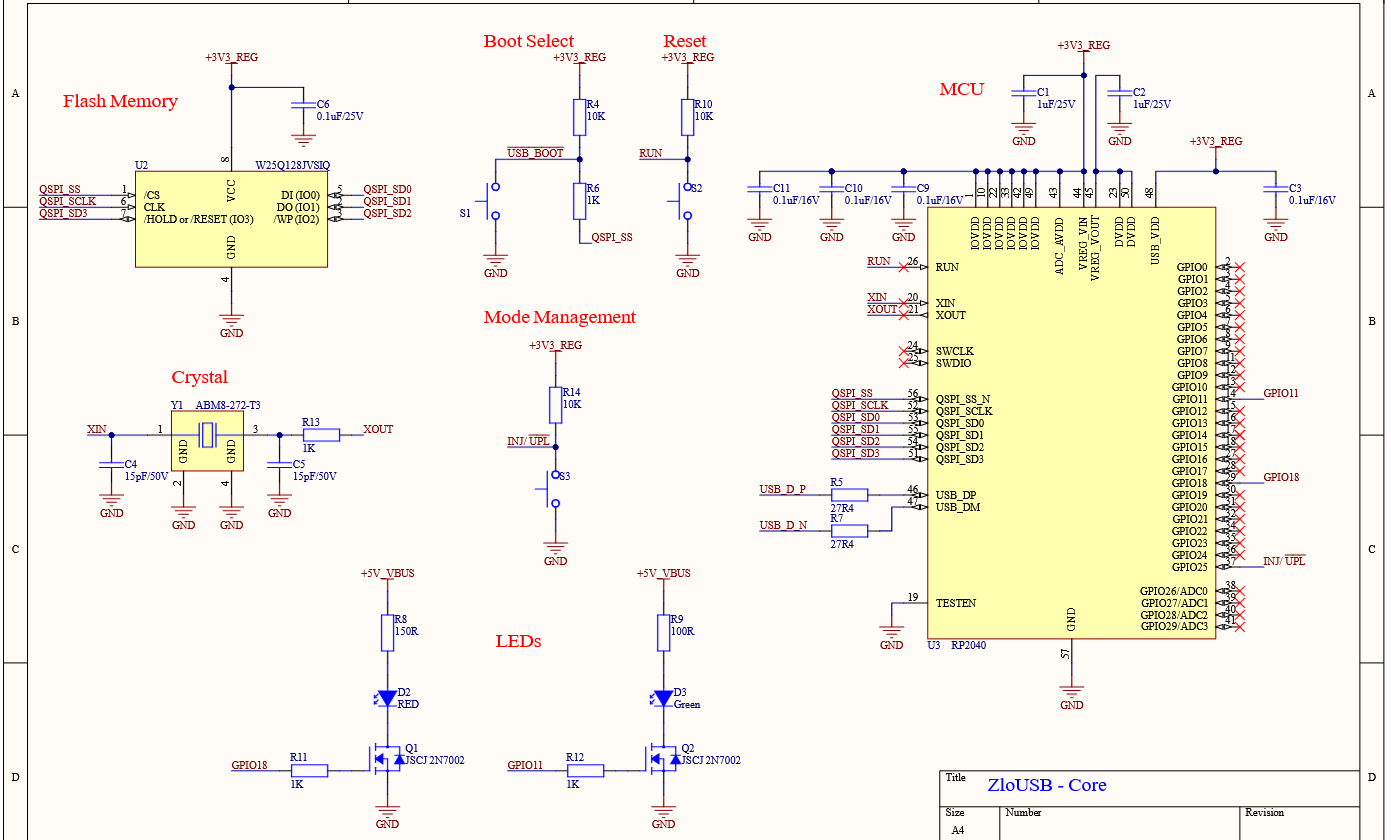
| Flash Memory | 16 MB (128 Mbit) Winbond W25Q128JVSIQ SPI Flash |
| Connectivity | Dual USB-A and USB-C (USB 2.0 Full-Speed @ 12 Mbit/s) |
| User Controls | 3 tactile buttons: \(\overline{\text{USBB}}\) (firmware upload), \(\text{RST}\) (manual reset), and \(\text{INJ/}\overline{\text{UPL}}\) (Injection / Script Upload) |
| Diagnostics | 2 status/debugging LEDs |
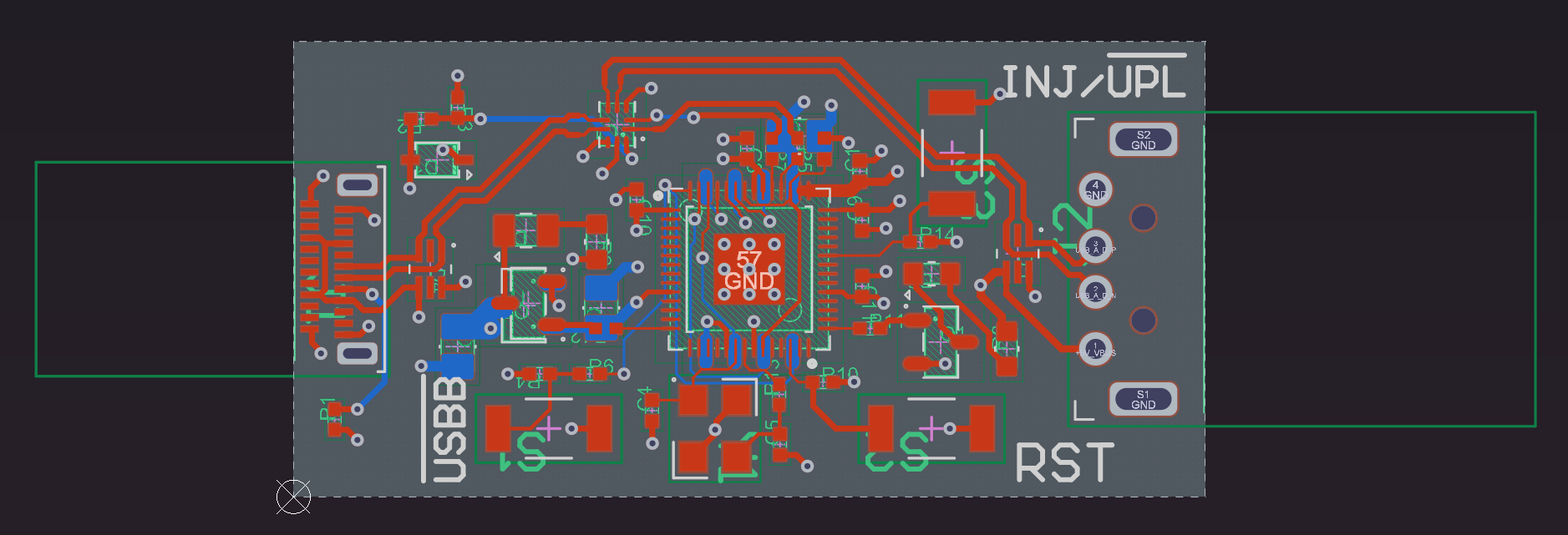
| PCB Form Factor | 4-layer ultra-compact USB stick layout, 40.0 mm x 20.0 mm |
Hardware Design & Engineering Constraints
The primary constraints for this build were miniaturization and low-cost fabrication and assembly:
- To leverage the cost-effective single-sided automated assembly of JLCPCB, the component selection was tightly filtered around JLCPCB’s Basic / Preferred Components library to avoid extra fees.
- Since budget constraints restricted SMT assembly to a single side, components required on the bottom layer were upscaled to larger footprints to enable manual post-assembly soldering.
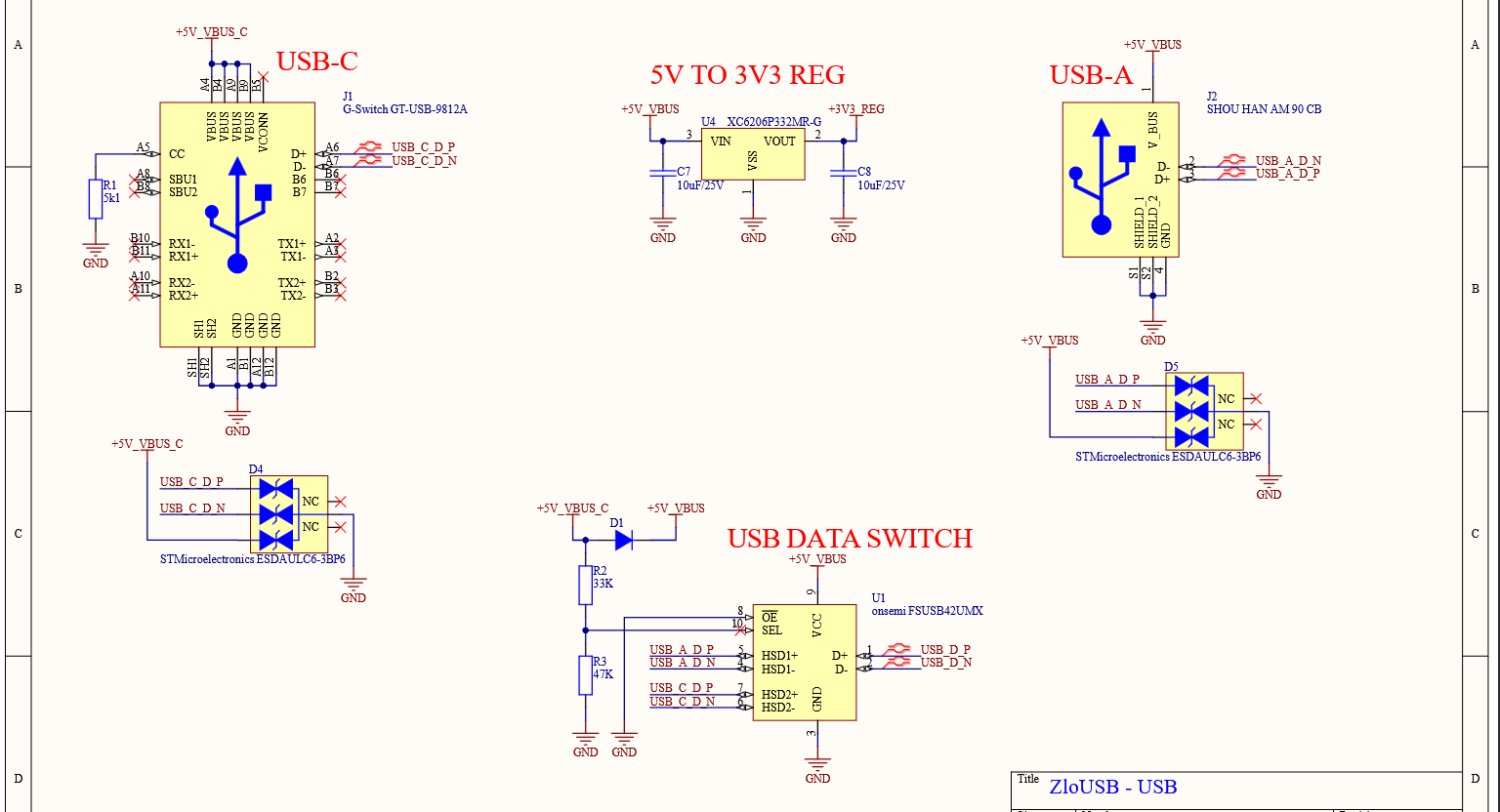
- The USB-A and USB-C connectors had to share the power line and the USB 2.0 D+/D- differential pair, whilst achieving identical trace lengths and \(90\,\Omega\) differential impedance.
Schematics
USB Interface & Power
RP2040 Core
3D Renders
| Top View | Bottom View |
|---|---|
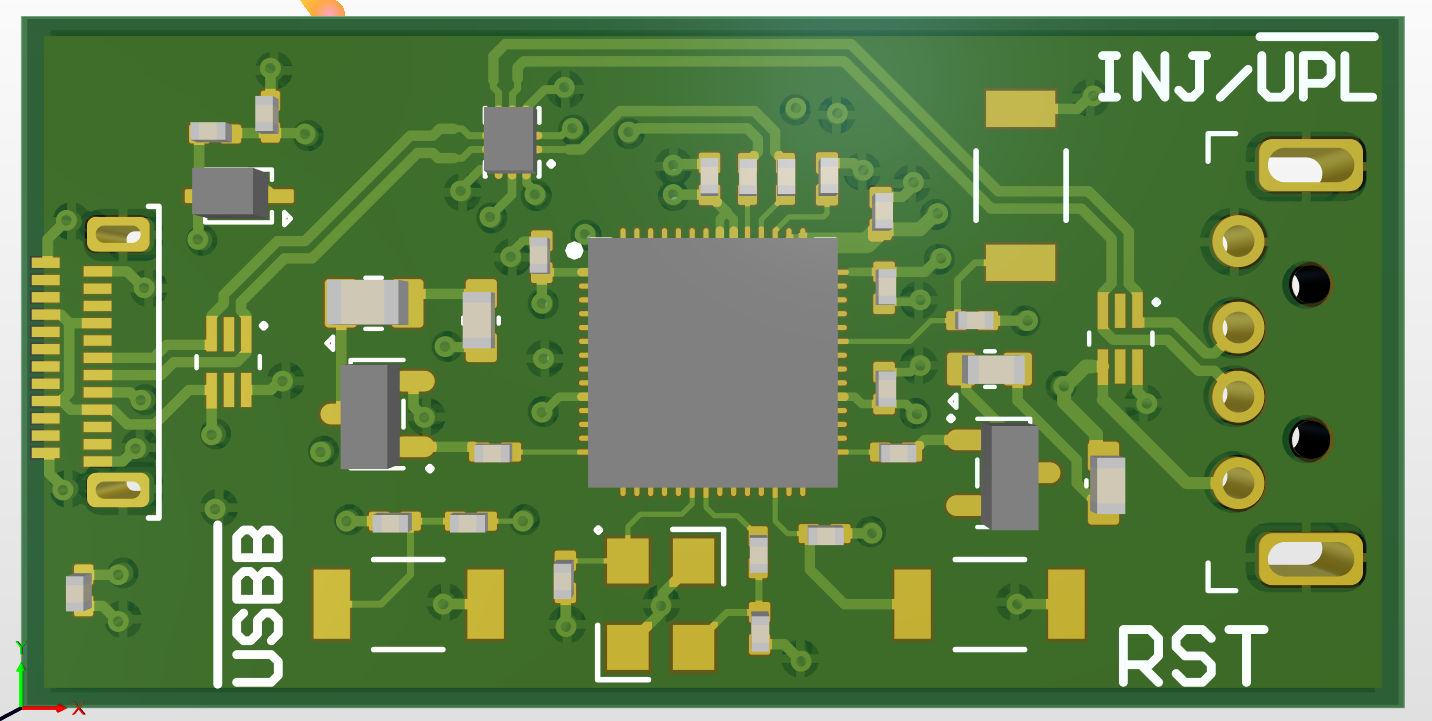 | 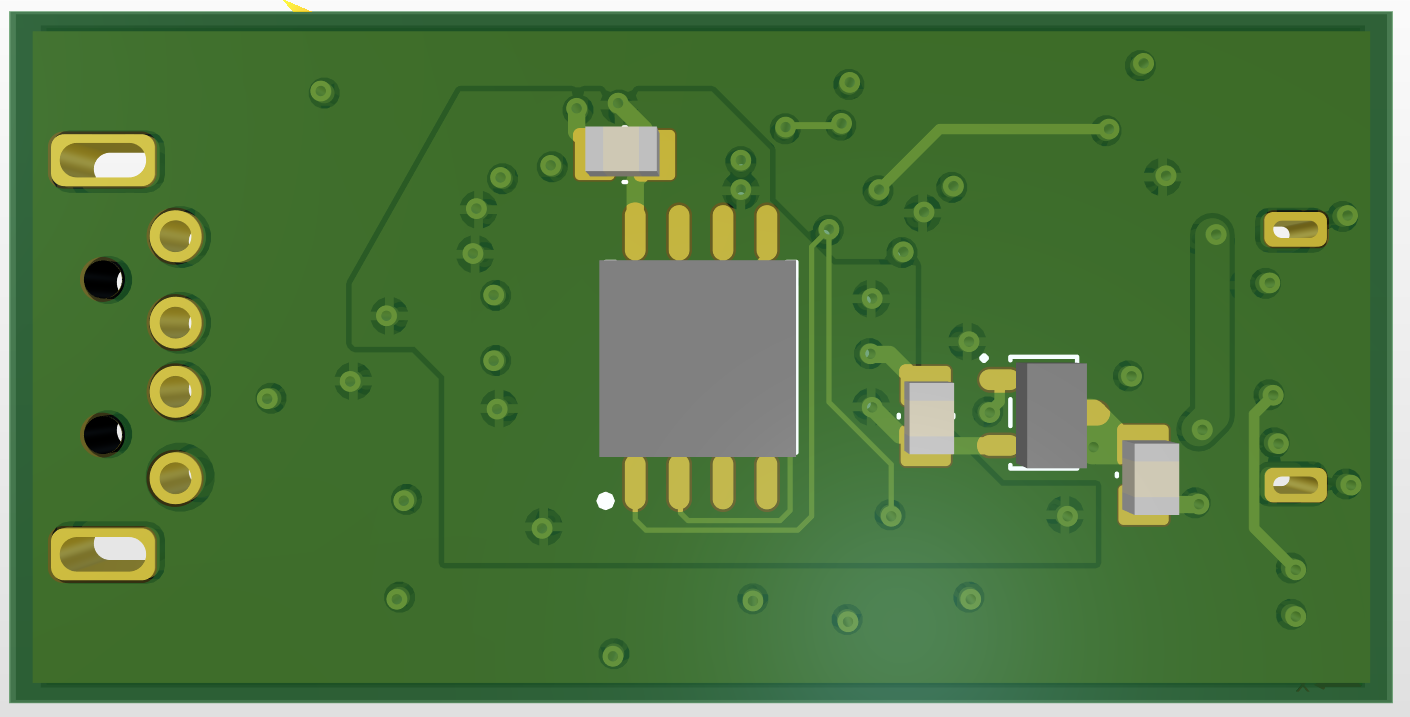 |
PCB Layout
| Layer | Description | Image |
|---|---|---|
| L1 (Top) | Signal - USB, RP2040, LEDs, buttons | 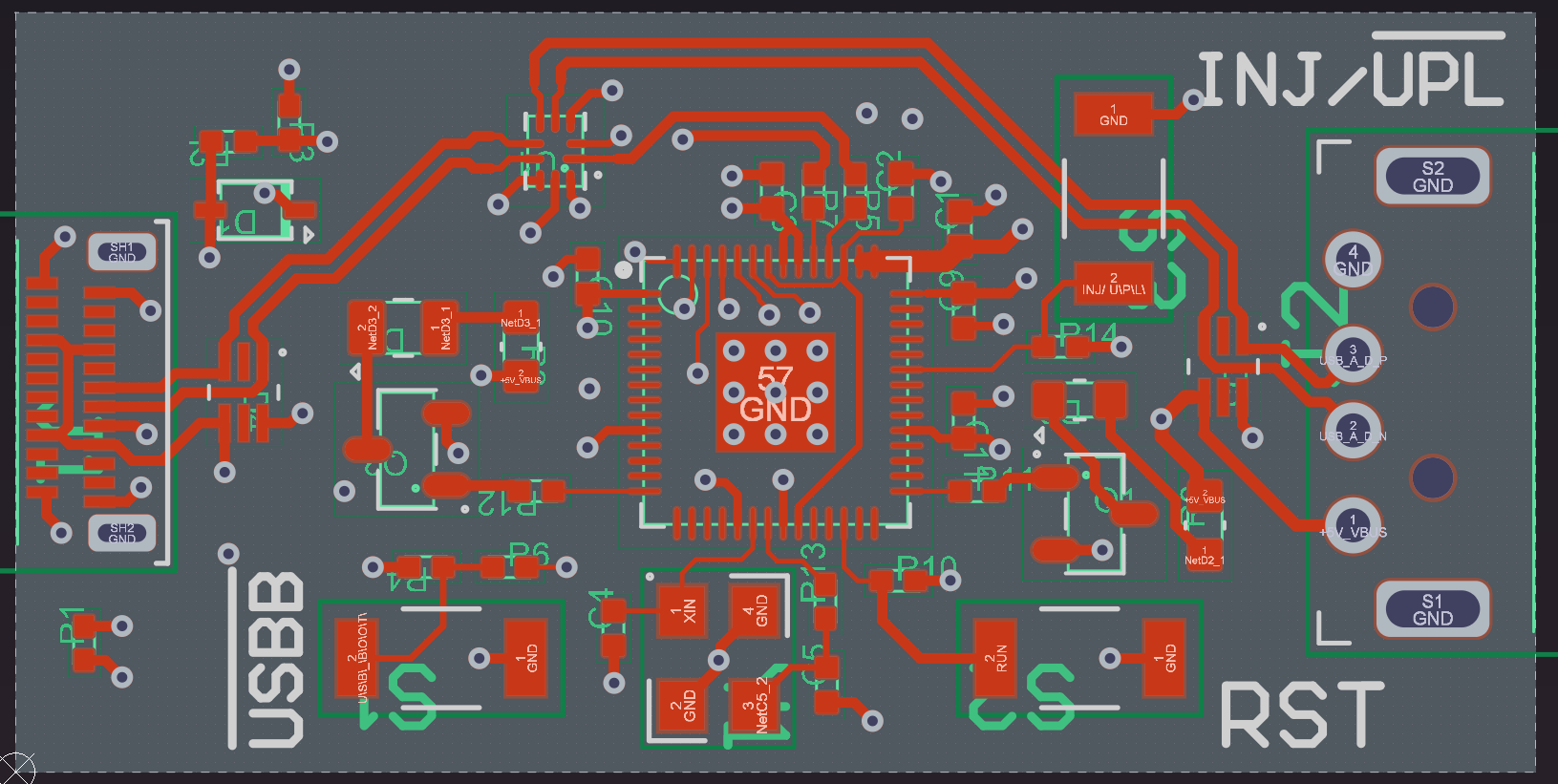 |
| L2 (GND) | Ground | 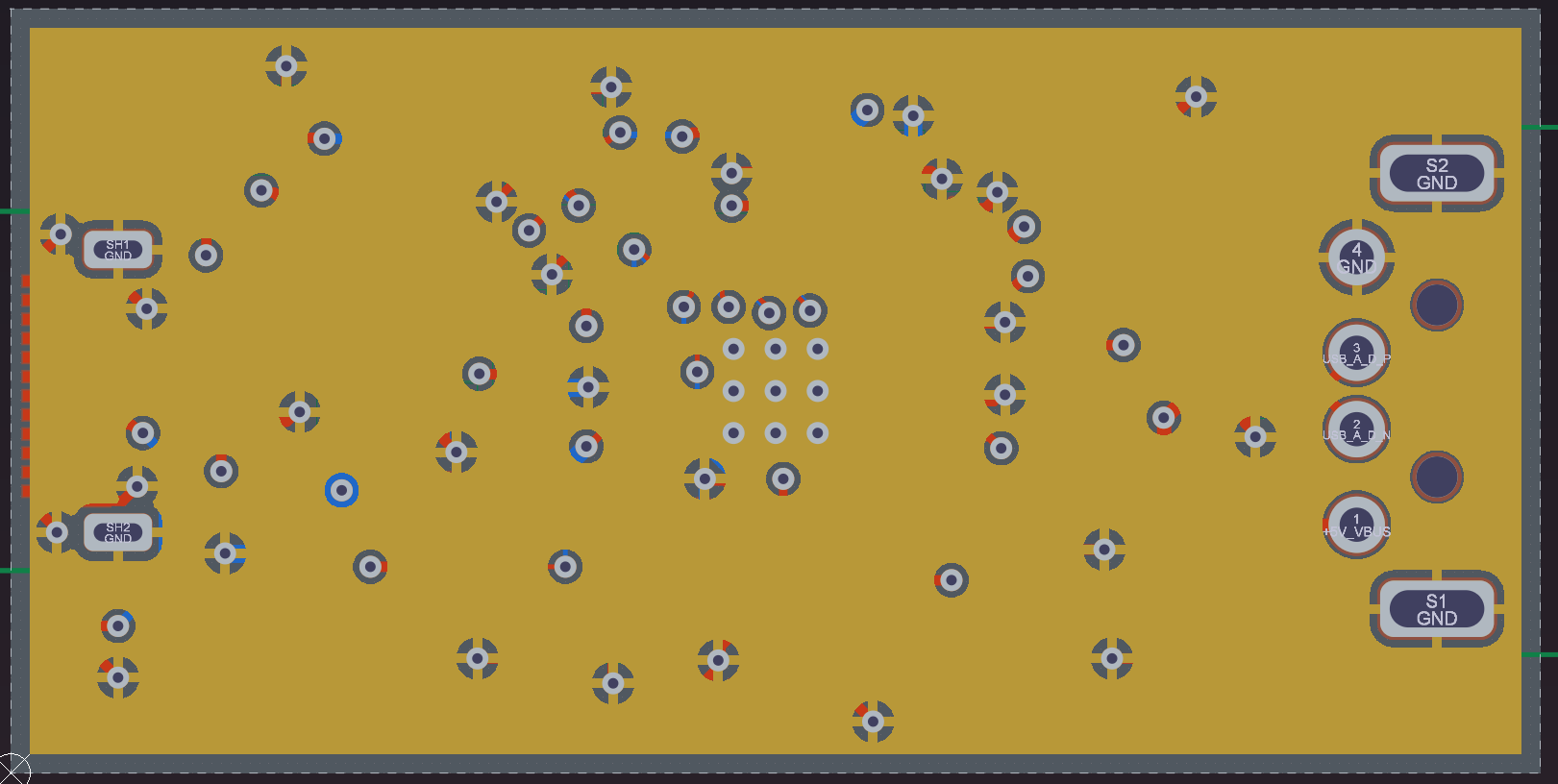 |
| L3 (PWR) | Power - 3V3, 5V VBUS | 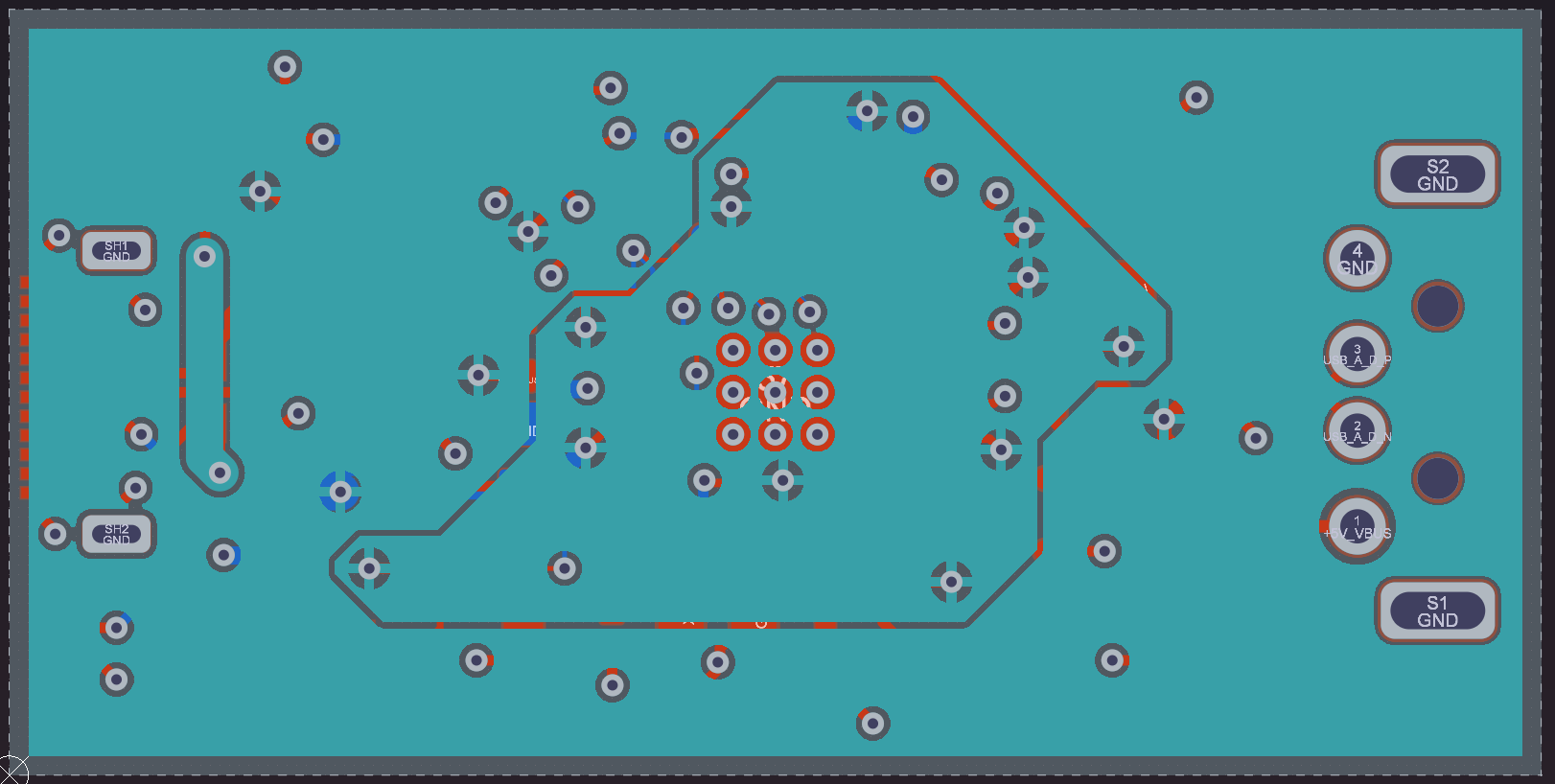 |
| L4 (Bottom) | Signal - flash memory, voltage regulator | 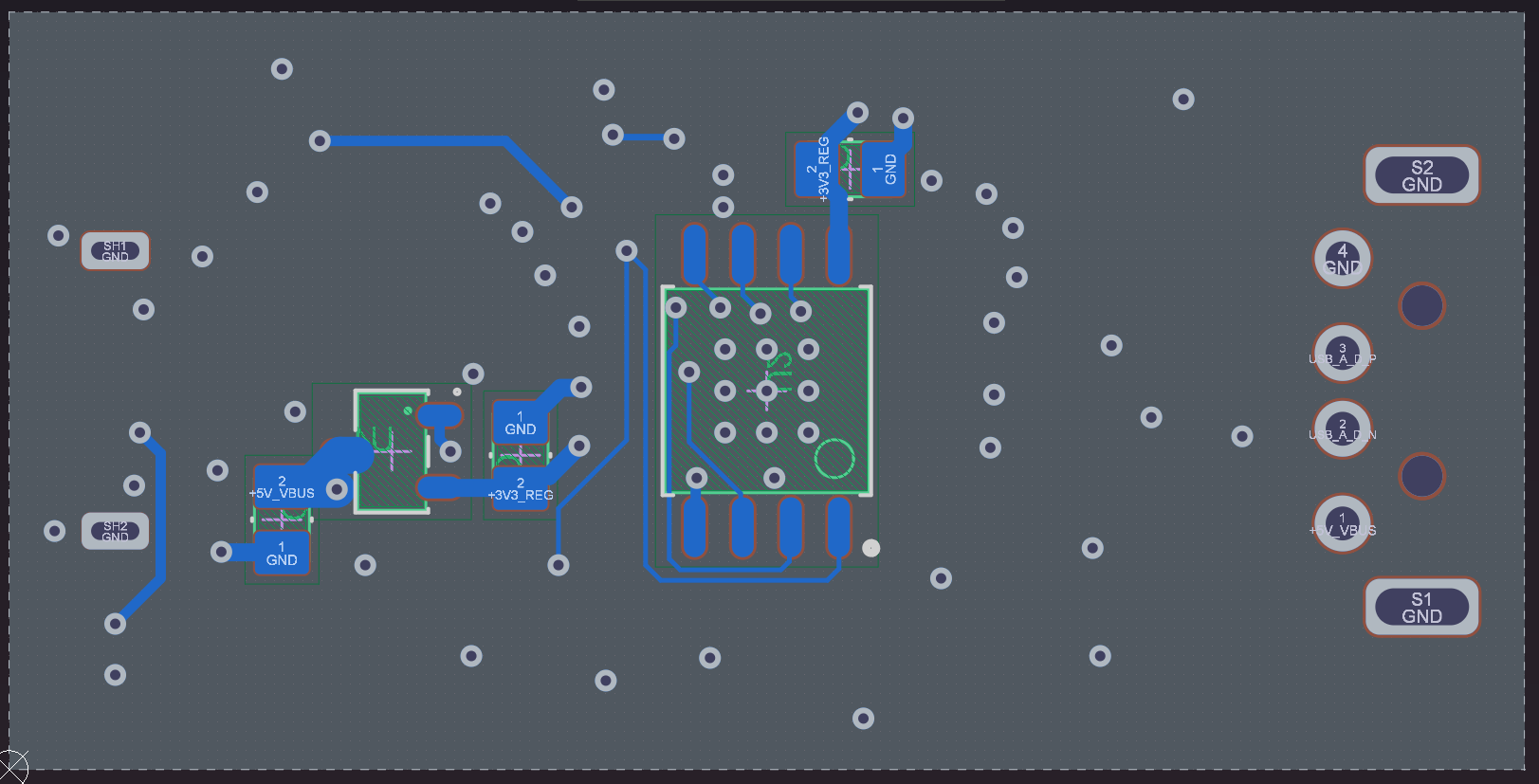 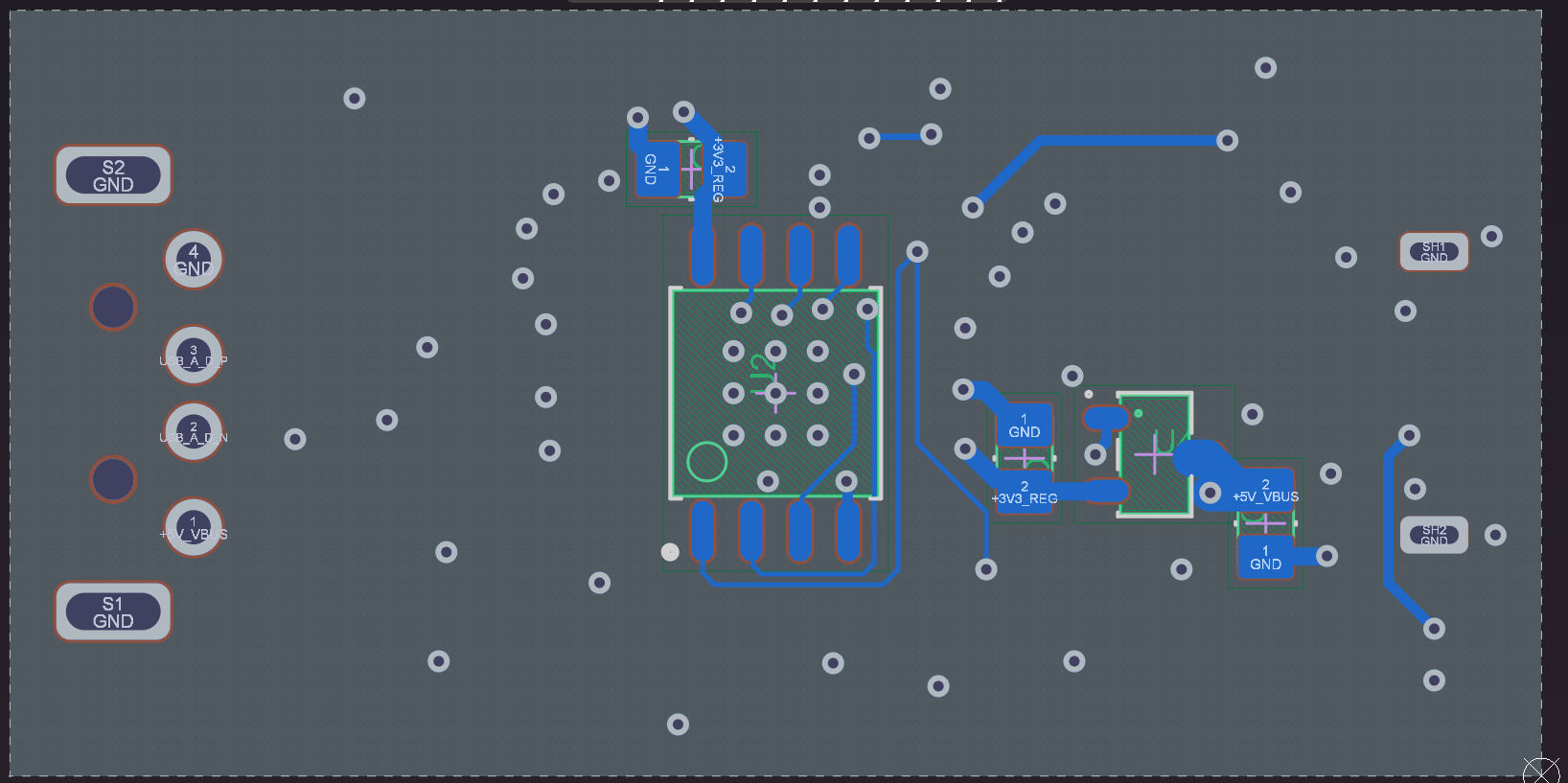 |